
After three consecutive years of infusing huge funds, foreign portfolio investors retreated from the Indian equity markets in a big way in 2022 with the highest-ever yearly net outflow of nearly Rs 1.21 lakh crore. The huge outflow, which surpasses by a big margin the previous record of Rs 53,000 crore net withdrawal in 2008, came amid aggressive rate hikes by central banks globally but 2023 is expected to be better on positivity about overall macroeconomic trends in India, experts said. Apart from global monetary tightening, volatile crude, rising commodity prices along with Russia and Ukraine conflict led to an exodus of foreign money in 2022.

Citing the massive surge in Omicron infections and the resultant impact on overall economic activities in the March quarter, Swiss brokerage UBS Securities has revised downwards its India's growth forecast for the current financial year to 9.1 per cent from 9.5 per cent earlier. However, UBS Securities does not see the third wave impact extending to the next financial year as it has revised upwards its real GDP forecast to 8.2 per cent, up from 7.7 per cent earlier, expecting the real GDP growth to remain well above the historical average. The World Bank pegs it at 8.3 per cent, unchanged from its June assessment, saying the recovery is not broad-based yet.

'Modi is imposing himself as the face of Gujarat to send a message that people should not forget that a Gujarati is prime minister.'

US interest rate normalisation policy is likely to keep global FX markets volatile.

Foreign portfolio investor (FPI) flows into India may remain tepid in 2022, said a recent note by Goldman Sachs, who now peg the foreign portfolio investment into India at $5 billion in 2022, down from their earlier forecast of $30 billion with risks skewed to the downside. "There has been $15 billion of equity outflows YTD in India already, and the IPO of the largest insurance company has been pushed out. "Additionally, with no mention of India's inclusion in global bond indices in the Union Budget, there are risks to our already conservative base case assumption of an announcement of India's likely inclusion into the GBI-EM Global Diversified Bond Index in Q4-2022," wrote Andrew Tilton, Goldman Sachs' chief Asia-Pacific economist in a co-authored report with Santanu Sengupta and Suraj Kumar.
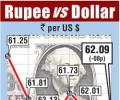
The partially convertible rupee closed at 62.09/10 per dollar compared with Tuesday close of 62.01/02, a fifth day of losses out of six.

'I was amazed at how tasty it was.' 'They did a good job with millets and lentils, which Mr Modi liked.'

The US Federal Reserve has retained the benchmark interest rate at near-zero level and struck an upbeat note saying that the American economy has continued to strengthen in recent months.

The Sensex was pulled lower mainly by Maruti, Tech Mahindra, PowerGrid, ICICI Bank, Axis Bank and SBI -- which suffered losses to the tune of 3 per cent.
After turning net buyers last month, foreign investors have become aggressive shoppers of Indian equities and have invested Rs 22,452 crore in the first two weeks of August amid softening inflation concerns. This was way higher than a net investment of nearly Rs 5,000 crore by Foreign Portfolio Investors (FPIs) in the entire month of July, data with depositories showed. FPIs had turned net buyers for the first time in July, after nine straight months of massive net outflows, which started in October last year.

Equity indices nursed losses for the second consecutive session on Tuesday as investors continued to dump IT, banking and FMCG stocks amid a bearish trend in global markets. Unabated foreign fund outflows and the rupee dropping to another record low against the US dollar added to the woes, traders said. Participants were also in wait-and watch mode ahead of release of retail inflation and factory output data.

'If because of El Nino, the monsoon is affected adversely in the current year, naturally it will affect income projections and consequently Budget numbers.'

She was born in Farrukhabad and went to the US to pursue her master's degree and a Ph.D.

Stock market investors are expecting a balanced Budget with a focus on job creation, increased spending on infrastructure, reigning in the deficit, and bringing the economy back on track, experts said on Wednesday. Stock markets have been subdued in the run-up to the Union Budget with BSE's benchmark Sensex is almost flat so far this month. Even the corporate earning season failed to excite the markets, while some indices like IT and bankex have seen some positive movements.

The RBI fixed the reference rate for the dollar at 64.1505 and for the euro at 72.2720.

Kharge said that the BJP is trying to misuse his 'Ravan' remarks for electoral gains in Gujarat.

Sensex, Nifty put up a good show in closing trade.

The Sensex came under fag-end selling pressure to close in the red for the sixth straight session on Friday as risk-off sentiment prevailed amid unabated selling by foreign institutional investors and concerns over inflation. The 30-share BSE benchmark pared all intra-day gains and declined 136.69 points or 0.26 per cent to end at 52,793.62. During the day, it had rallied 855.4 points or 1.61 per cent to 53,785.71. On similar lines, the broader NSE Nifty dipped 25.85 points or 0.16 per cent to settle at 15,782.15.

The Nifty ended with a loss of five points at 6,113.
Benchmark stock indices Sensex and Nifty closed with losses in highly volatile trade on Thursday as banking and financial stocks retreated amid a weak trend in global equity markets. The 30-share BSE Sensex declined 89.14 points or 0.15 per cent to settle at 57,595.68. During the day, it touched a low of 57,138.51 and a high of 57,827.99. The broader NSE Nifty dipped 22.90 points or 0.13 per cent to settle at 17,222.75.

According to the global financial services major, FIIs have recouped around 25 per cent of the outflows seen over the June-August period, when the country witnessed its sharpest bout of FII outflows since the global financial crisis.

Benchmark stock indices Sensex and Nifty rebounded from early lows to close over 1 per cent higher on Tuesday, helped by heavy buying in index heavyweight Reliance Industries, Infosys and TCS amid gains in global equities. The 30-share BSE Sensex closed up by 696.81 points or 1.22 per cent at 57,989.30. It touched a high of 58,052.87 and a low of 56,930.30 in intra-day trade.

'Market feels this Budget will promote all-round growth and that is what is giving it confidence.'

The markets have been unable to sustain at higher levels as a rise in bond yields globally, especially in the US have dented sentiment. Surging commodity prices, especially crude oil that have now hit $70 a barrel (Brent) coupled with inflation woes and fear of sporadic lockdown across major economic hubs back home as Covid cases rise have chased the bulls away. In the short-term, analysts expect the markets to remain volatile as they react to news flow - both from overseas and developments back home. Investors, they say, need to keep a tab on how the US treasury yields move, which in turn will have a ripple effect on how big money moves across developed (DMs) and emerging markets (EMs), including India.

The suicide note also stated about "foul language" used by people associated with a cooperative society and threat by lenders (finance firms), a police officer said on Monday.

Market benchmarks gave up intra-day gains to close in the red for the sixth session on the trot on Friday, capping a bruising week which saw a massive dash for safety amid rate hikes by global central banks and fears of slowing growth.

Congress leader Kanhaiya Kumar on Wednesday claimed the Bharatiya Janata Party's 1990 rath yatra was for seeking "satta (power)", but the Congress's 'Bharat Jodo Yatra' is for "satya (truth)".
The rupee appreciated 7 paise to 79.74 against the US dollar in early trade on Thursday as a positive trend in domestic equities supported the local unit. However, a strong American currency overseas and forex outflows restricted the rupee's gain, dealers said. At the interbank foreign exchange, the rupee opened at 79.72 against the American dollar, then went lower to trade at 79.74 against the greenback in early deals, registering a gain of 7 paise over the last close.

Global trends, WPI inflation data for April and the ongoing quarterly earnings of corporates would be the major driving factors for the stock markets, analysts said. Investors would also keep a tab on the movement of foreign institutional investors who are on a selling spree in the domestic equity market for the past many days. "Inflation concern and monetary tightening across the globe are key concerns for the equity markets. "Equity markets are under the strong grip of bears however they look extremely oversold and due for a pullback rally.

'If Manipur is divided on ethnic lines, similar demands will come in other states also.'

Weakness in the greenback overseas against the backdrop of sluggish US macro data outcome helped the home currency move higher
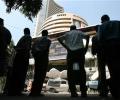
The 30-share Sensex ended up 12 points at 28,517 while the 50-share Nifty ended nearly unchanged at 8,660.

India's exports may have touched an all-time high of $422 billion in 2021-22 but recession in key western markets and geo-political crisis due to the Russia-Ukraine war are expected to impact the growth of the country's outbound shipments in 2023. All the global trade promoting factors like political stability, movement of goods, adequate availability of containers and shipping lines, demand, stable currency and smooth banking systems are in disarray. Adding to the woes, COVID cases have again started rising in countries like China, Japan, South Korea and the US.

Mr Modi might have questions to ask himself on the most formidable strategic challenge before India that he inherited from the United Progressive Alliance: The triangulation between China and Pakistan. The failure to break out of it, or even loosen it a bit, is something to reflect on, notes Shekhar Gupta.

Sectorally, metal and banking stocks rallied the most, while FMCG and realty stocks came under selling pressure.

The dollar-rupee rate could move in the opposite direction if dollar policy rates rise and the FPIs sell in December, says Devangshu Datta.

It does feel like we are close to the end of the rupee's rally, says Jamal Mecklai.

On gold buying occasions such as Akshaya Tritiya, Chiraj Mehta points out, investors are often confronted with the question: Should I make just a token purchase, or should I buy more towards building my allocation in the yellow metal?

The US FOMC concludes its two-day meeting today while the Bank of Japan will start its two-day meeting today.

RBI's fifth bi-monthly monetary policy meet due tomorrow also kept the investors on their toes.
 © 2026 Rediff.com - Advertise with us - Disclaimer - Privacy Policy - Sitemap - Feedback - About us - Terms of use - Grievances